Summer heat is hard on every part of a vehicle, but the cooling system takes the brunt. It has to manage engine temperature while the A/C is running, traffic is slow, pavement is hot, and the engine bay has very little room to shed heat.
When everything is healthy, the system keeps up quietly. When coolant is low, a fan is weak, a hose is aging, or the radiator is partly restricted, summer driving can expose the problem fast. The temperature gauge may creep up, the A/C may start blowing warmer, or coolant may begin disappearing between visits.
Heavy Heat Soak After Parking
Hot pavement and direct sun can turn a parked vehicle into a heat box. After sitting for hours, the engine bay, radiator, hoses, battery, wiring, and coolant reservoir can all be ready for the next drive, already hot. That makes the cooling system work harder from the first few minutes.
Heat soak is especially noticeable during short stops. You park, run into a store, come back out, and the temperature under the hood has climbed while the engine was off. When you restart, the system has to pull heat down again while the A/C is trying to cool the cabin.
Stop-And-Go Traffic Builds Engine Heat
A cooling system performs more efficiently when air is moving through the radiator. In slow traffic, there is less natural airflow. That means the cooling fans have to do more of the work. If a fan motor, relay, fuse, sensor, or wiring connection is weak, the temperature may rise while the car is sitting still.
This is why some vehicles run fine on the highway but heat up in traffic. The radiator may still cool well when air is moving, but the system struggles when it has to depend on the fans. A temperature gauge that rises at idle and settles back down once you drive should be checked.
A/C Use Adds More Load
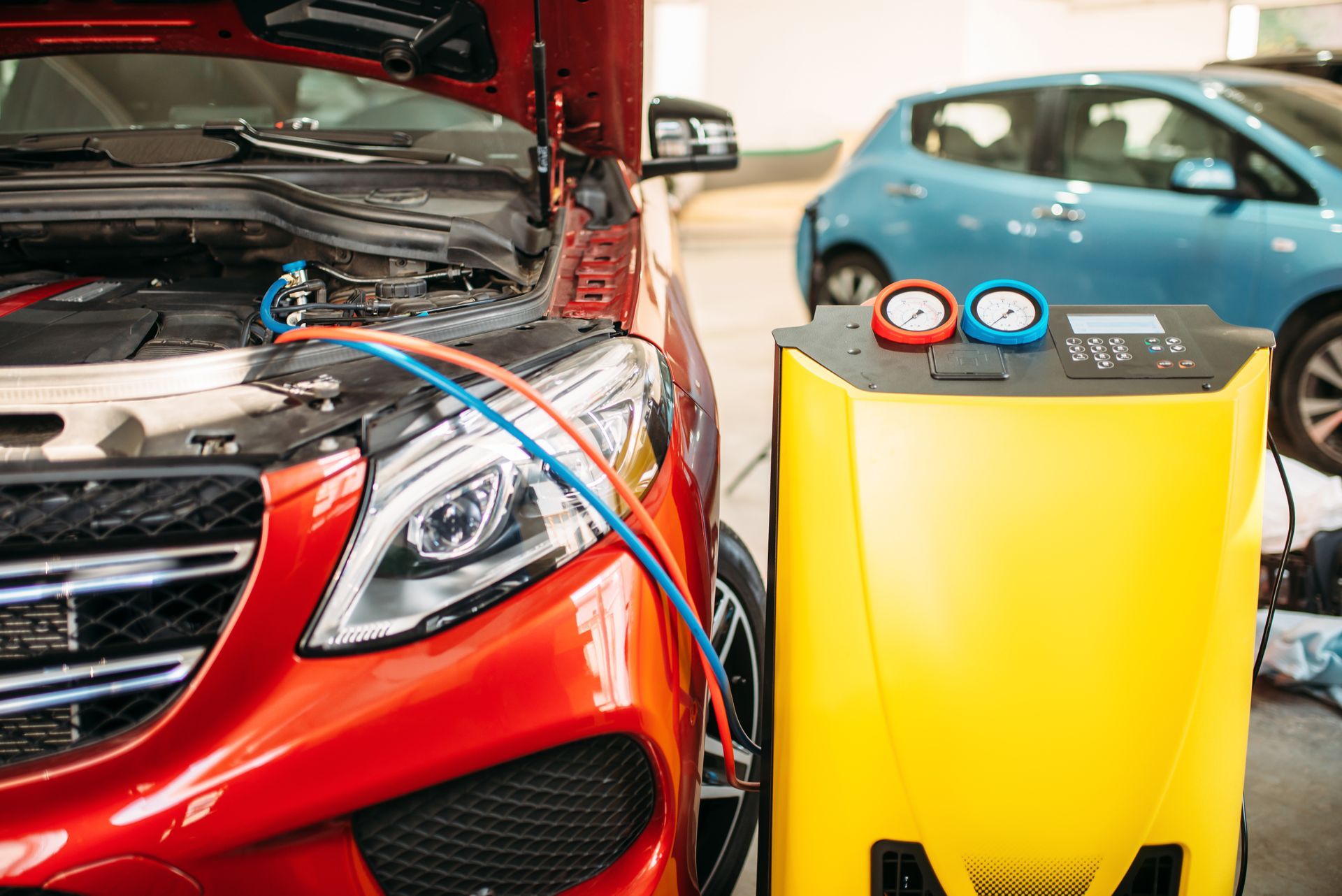
Your A/C system and cooling system work near each other. When the A/C is on, the condenser releases heat in front of the radiator. That heat has to be managed while the engine is already working in high outdoor temperatures.
A healthy system can handle that load. A weak one may show warning signs. The A/C might blow cold while driving, then warm up at red lights. The engine temperature might rise with the A/C on. You may also hear the cooling fan running harder than usual. Those clues can point toward airflow, fan, refrigerant, or cooling system problems.
Low Coolant Gets Riskier In Summer
Low coolant is a problem year-round, but summer makes it more urgent. Coolant carries heat away from the engine and helps prevent corrosion inside the system. When the level drops, air pockets can form, and hot spots can develop inside the engine.
A low reservoir means coolant went somewhere. It may be leaking from a hose, radiator, water pump, thermostat housing, cap, reservoir, or heater core. It may also be leaking internally, which needs more careful testing. Topping it off can help for the moment, but it does not fix the cause.
Long Idling Can Reveal Weak Parts
Many drivers idle more in summer. They wait with the A/C running, sit in school pickup lines, pause in traffic, or let the cabin cool before leaving. Idling removes the extra airflow generated by driving, so cooling fans, coolant flow, and radiator condition become more important.
A weak water pump, slipping belt, clogged radiator, aging thermostat, or slow fan can show up during long idle periods. The vehicle may not overheat right away, but the gauge may move higher than normal. That is a warning sign, not something to learn to live with.
Humidity And Salt Air Can Age Parts Faster
Coastal summer driving brings more than heat. Humidity and salt air can contribute to corrosion on electrical connections, clamps, radiator fins, and cooling fan components. Rubber hoses and plastic fittings also age from heat cycles, pressure, and time.
A hose can look acceptable from above and still be soft, swollen, brittle, or weak near a clamp. Plastic coolant fittings can become fragile as they age. Regular maintenance helps catch those small changes before a hose splits or a fitting cracks during a hot drive.
Warning Signs Your Cooling System Is Under Stress
Cooling system trouble often gives small warnings before a full overheat. Pay attention to signs like these:
- The temperature gauge is rising higher than normal
- A/C getting warmer at idle
- Coolant level dropping between services
- Sweet smell after driving
- Steam from under the hood
- Cooling fan running loudly or not running at all
- Crusty coolant residue near hoses or fittings
- Heater performance is changing unexpectedly
These signs do not all point to the same repair. They do mean the system should get an inspection before the heat makes the problem harder on the engine.
Get Cooling System Service In Fort Myers, FL, With Gulf Coast Auto Repair
If your vehicle runs hot, loses coolant, smells sweet, or struggles to stay cool with the A/C on, Gulf Coast Auto Repair in Fort Myers, FL, can check the radiator, fans, hoses, thermostat, water pump, coolant, and pressure system.